
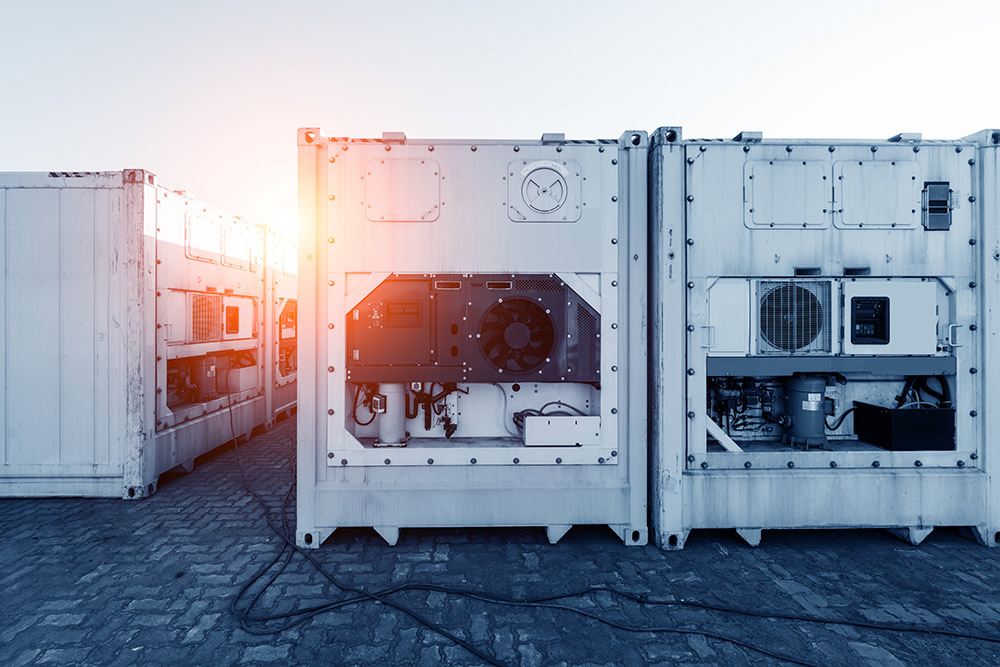
Renting a refrigerated container is a straightforward transaction — until it isn’t. Like any commercial equipment rental, the details matter: the right unit for your product, the right power setup for your site, the right service terms for your risk tolerance. Businesses that skip the due diligence often find themselves with equipment that doesn’t perform as expected, or rental terms that don’t cover them when something goes wrong.
Before you sign a rental agreement for a refrigerated container, here are five questions worth asking.
1. What Temperature Range Can This Unit Reliably Maintain?
Not all refrigerated containers are created equal. Some are designed for standard refrigerated storage (typically 34–40°F for produce, dairy, and general food storage). Others can operate at lower ranges suitable for frozen product. Some units can be configured for specific ranges that pharmaceutical or specialty food applications require.
More importantly, reliable maintenance of a temperature range under load — a fully stocked container in summer heat — is different from rated performance at empty capacity in controlled conditions.
Ask your provider:
- What is the unit’s minimum and maximum temperature range?
- What’s the typical temperature variation within the container under normal load?
- Has this specific unit been recently serviced and verified to perform within spec?
A reputable provider will answer these questions directly and provide service records on request. If they can’t, that’s informative.
2. What Power Does the Unit Require, and Do I Have It?
This is one of the most commonly overlooked questions — and one of the most practically important. Refrigerated containers typically run on either single-phase or three-phase electrical power, and the two are not interchangeable.
Three-phase power (usually 208V or 480V, three-phase) is standard at most commercial and industrial facilities. Single-phase power (standard 120/240V) is more widely available but less common for larger commercial reefer units.
Before delivery, confirm:
- What is the power specification of the unit (voltage, phase, amperage)?
- What outlet or disconnect does it require?
- Do I have that power available at my planned placement location?
- If not, what’s the cost and timeline to get it?
Don’t assume your facility’s power is the right type until you’ve verified it. An electrician’s visit before container delivery is a much better experience than discovering a mismatch on delivery day.
3. What Are the Delivery and Placement Requirements?
A refrigerated container is a large piece of equipment — typically 20 or 40 feet long — that arrives on a flatbed or tilt-bed truck. Placing it requires adequate access, clearance, and a suitable surface.
Ask before scheduling delivery:
- What kind of delivery truck is used, and what access does it need?
- What surface does the container need to rest on? (Concrete, asphalt, and compacted gravel are typically fine; soft or uneven ground may not be.)
- Are there any overhead clearance issues at my site that could affect delivery?
- What’s the typical delivery timeline from order to placement?
Planning this in advance avoids the situation where the delivery truck arrives and can’t place the unit because of an access issue you didn’t anticipate.
4. What Happens If the Unit Malfunctions?
Cold storage reliability is only as good as the service commitment behind it. A refrigerated container that breaks down during a peak season, over a weekend, or during a critical production period is a serious problem — and how quickly your provider can respond determines how serious.
Ask directly:
- Do you offer 24/7 service coverage?
- What is your typical response time for a service call?
- If a unit cannot be repaired on-site, what is your replacement or substitute unit policy?
- Who do I call if there’s a problem, and what’s the process?
A provider who can give you specific answers to these questions — and who has the operational capability to back them up — is worth paying a modest premium for. Cold storage downtime is expensive; 24/7 service access is valuable.
5. What Are the Full Terms of the Rental Agreement?
Rental agreements vary significantly between providers, and the fine print matters. Before signing:
- What is the minimum rental period, and what are the terms for extending or ending early?
- What are the delivery and pickup fees, and when do they apply?
- Who is responsible for routine maintenance during the rental period?
- What damage conditions are and aren’t covered by the rental agreement?
- What are the terms if you need to upgrade to a larger or different unit mid-rental?
Understanding the full cost of the rental — not just the monthly rate — before you commit avoids surprises when the invoice arrives.
A&S Reefers: Straight Answers to Straight Questions
A&S Refrigerated Containers operates with the transparency that comes from an owner-operated business that depends on reputation. Their team provides free quotes, clear rental terms, and 24/7 service availability throughout California.
Get the answers you need before you commit. Visit asreefers.com or call 1-855-265-3911 to speak with a cold storage specialist.