
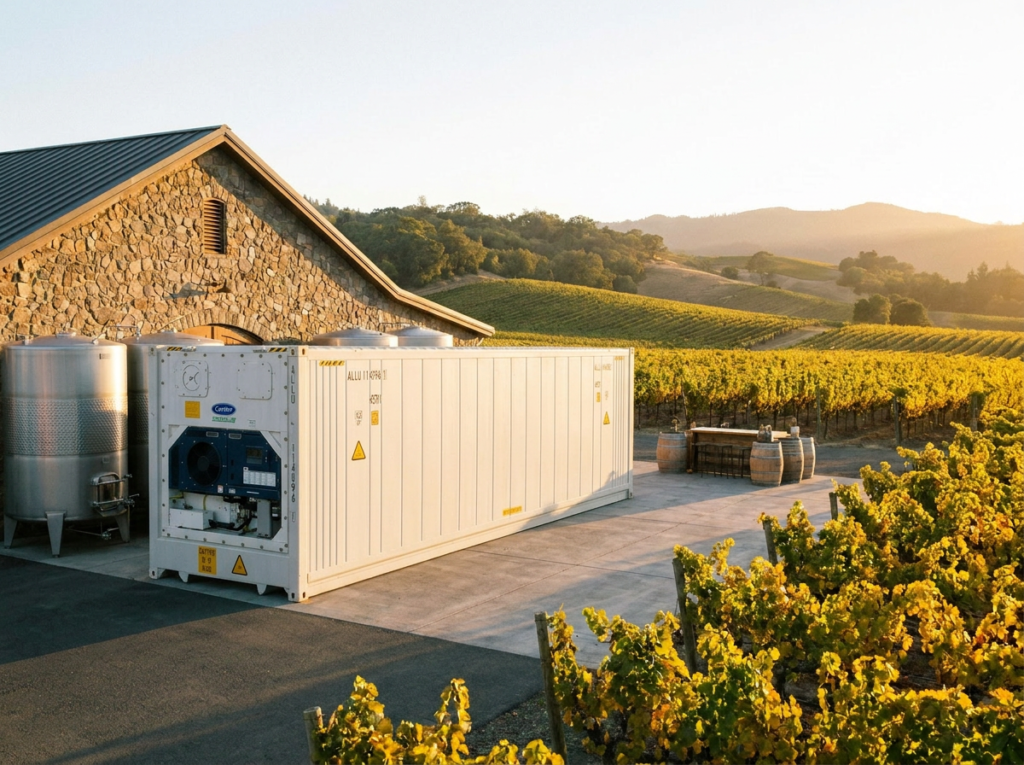
The Bay Area is home to one of the world’s most dynamic beverage industries. From Napa and Sonoma wine producers to the dense craft brewery scene in Oakland, San Jose, and San Francisco, beverage companies in the region navigate a unique set of cold storage challenges — and opportunities.
Whether you’re a winery managing barrel and bottle inventory, a craft brewery distributing kegs and cans across the Bay, or a beverage distributor handling multiple producers and product types, cold storage is a recurring strategic question.
Why Beverage Cold Storage Is More Complex Than It Looks
Unlike produce or dairy, beverage cold storage isn’t always about strict regulatory compliance. It’s about quality preservation and market value.
Wine is highly temperature-sensitive during storage and transport. Ideal wine storage runs between 55–65°F. Fluctuations above or below this range cause premature aging, cork damage, or oxidation — outcomes that degrade a product commanding a premium price. For small-lot or high-end bottlings, improper storage can destroy the value of an entire batch.
Craft beer varies by style, but most packaged beer benefits from cold chain integrity from packaging through retail. Light beer, IPAs, and any hop-forward style degrades meaningfully at ambient temperatures in ways that directly affect customer perception at point of consumption.
Spirits and canned cocktails are less temperature-sensitive than wine or beer, but spirits companies increasingly use cold storage for their RTD (ready-to-drink) product lines, which often contain juice or dairy components that require refrigeration.
Non-alcoholic beverages — cold-brew coffee, kombucha, fresh juices, and functional beverages — have full cold chain requirements from production through retail. This category is growing rapidly in the Bay Area, and many producers underestimate the cold storage infrastructure required to scale.
Cold Storage Use Cases for Bay Area Beverage Producers
Winery barrel and bulk storage: During barrel aging, temperature-controlled storage extends the process timeline and supports quality outcomes. Portable reefer containers provide temperature-controlled environments for barrel storage at smaller wineries that can’t justify or afford a dedicated temperature-controlled cave or warehouse.
Finished goods inventory buffer: Between production or bottling and outbound distribution, wines and beers need to be held in conditions that preserve quality. When production runs ahead of distribution capacity, overflow cold storage prevents product from sitting in sub-optimal conditions.
Tasting room and event cold storage: Bay Area wineries and breweries host events that require substantial cold product inventory on-site. A refrigerated container positioned near a tasting room or event space provides the cold storage capacity for an event without requiring permanent infrastructure.
Distributor overflow: Bay Area beverage distributors handle multiple producers and experience the same seasonal demand patterns as food distributors. Pre-holiday volumes, summer craft beer demand, and new product launch builds all create overflow situations that on-site reefer containers resolve.
Shipping container cross-docking: Some smaller Bay Area producers use refrigerated containers as a cold chain link between production and national or international shipping logistics, holding product in temperature-controlled conditions until it moves into long-distance cold chain infrastructure.
Single-Phase vs. Three-Phase Power for Beverage Applications
One practical consideration for beverage companies evaluating refrigerated containers is power supply. Larger reefer units require three-phase power, which is standard at commercial facilities but may not be available at winery estates, rural production facilities, or event venues.
Single-phase reefer units are available and work well for smaller footprint applications — a tasting room supplemental cooler, a small event cold storage unit, or a barrel storage environment for a small producer. A qualified reefer provider can help you match the unit specification to your available power infrastructure.
Flexibility for a Growing Industry
The Bay Area beverage industry is in a period of significant evolution — new producers entering the market, established brands scaling distribution, and a shift toward DTC (direct-to-consumer) channels that create new logistics requirements.
Flexible cold storage — rented when needed, returned when it’s not — aligns well with this dynamic environment. Producers can scale cold storage capacity to match their growth without locking in infrastructure costs that may not fit their business in two years.
A&S Reefers: Cold Storage for Bay Area Beverage Companies
A&S Refrigerated Containers serves beverage producers and distributors throughout California with refrigerated container rentals, sales, and maintenance. Whether you need a compact unit for a tasting room or a full-size container for distribution overflow, their team can identify the right solution for your product and power requirements.
Visit asreefers.com or call 1-855-265-3911 to discuss your beverage cold storage needs.