
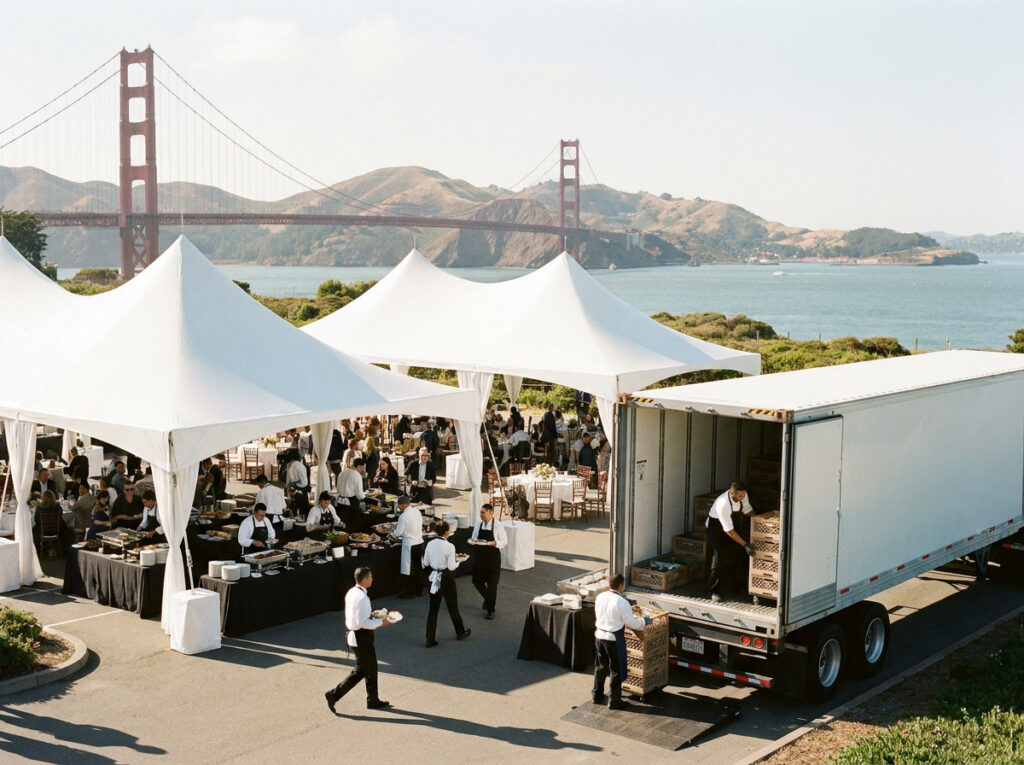
Corporate event catering in the Bay Area is a high-stakes business. A single large-scale event might require coordinating meals for hundreds or thousands of guests across multiple service periods, with food prepared hours in advance and held in temporary facilities before service. Every element of that process has to work — and in the food service context, “has to work” means the cold chain has to hold.
For catering companies managing this scale of operation, the cold storage challenge is one of the defining logistical problems of the business.
Why Event Catering Has a Unique Cold Storage Challenge
Most commercial kitchens are designed for the average production day, not the peak event day. When a catering company wins a large corporate contract — a tech company all-hands, a convention center event, a multi-day conference — their production volume can multiply several times over. The cold storage capacity that handles a normal week is suddenly undersized for the two or three days of intense preparation leading up to the event.
The variables that make event catering cold storage particularly complex:
Volume spikes are sharp and short. The need for cold storage capacity jumps dramatically in the 24–72 hours before a large event, then drops back to normal. Long-term cold storage expansion doesn’t solve a short-term problem.
Location flexibility matters. Large events often require cold storage at or near the venue, not just at the central commissary. Product needs to be cold and accessible at the point where service is staged.
Temperature reliability is non-negotiable. Food safety regulations, health department oversight, and the reputational stakes of serving a large corporate client mean that any temperature deviation is simply not acceptable.
Timing is everything. Cold storage solutions need to be in place before preparation begins, not arranged while the team is already cooking.
How Refrigerated Containers Solve the Event Catering Cold Storage Problem
Portable refrigerated containers address each of these challenges directly:
Scalable for event size. A single 20-foot container provides substantial cold storage for mid-size events. Larger events can use a 40-foot unit or multiple containers staged strategically. The capacity scales to the event rather than requiring the caterer to scale their event to available infrastructure.
Deployable at the venue. Containers can be positioned at a convention center loading dock, a corporate campus, an outdoor event space, or any other venue that has power access and a level surface. Cold storage goes where the food needs to be, not the other way around.
Temperature-controlled and certified. Modern reefer units maintain precise temperature ranges and can operate unattended through a preparation period, with consistent performance that doesn’t require staff monitoring.
Fast setup and breakdown. A container can be delivered, positioned, and operational within 24 to 48 hours. After the event, pickup is equally fast.
Planning Timeline for Event-Based Cold Storage
For catering companies integrating temporary cold storage into their event logistics, here’s a working timeline:
- 4–6 weeks before the event: Confirm your cold storage requirements based on event menu, guest count, and preparation schedule. Book the container rental.
- 3–5 days before the event: Confirm delivery logistics with the venue — surface access, power hookup location, and delivery window.
- 1–2 days before the event: Container delivered and positioned. Power connected and temperature verified before any product moves in.
- During preparation: Product moves from commissary to container as it’s prepared. Temperature is maintained throughout.
- Day of event: Product staged from container for service.
- Post-event: Container emptied, cleaned, and ready for pickup per the rental agreement.
The Financial Case for Rental vs. Owned Event Cold Storage
For most catering companies, owning a refrigerated container specifically for event use is a challenging financial case. The utilization rate — the percentage of time the unit is actually in use — may be low if events are infrequent, and ownership carries ongoing maintenance costs regardless of use.
Rental provides a more aligned cost model: you pay for cold storage capacity when you need it for a specific event, and the cost gets incorporated into that event’s budget. The math is clean, the commitment is short, and the equipment is someone else’s maintenance responsibility.
A&S Reefers: Event-Ready Cold Storage for Bay Area Catering
A&S Refrigerated Containers provides reefer units for catering operations throughout California, with fast delivery, flexible rental terms, and 24/7 service support. Their team understands the time-sensitive nature of event logistics and works with your schedule to ensure your cold storage is in place and operational before preparation begins.
Don’t leave your next big event’s cold chain to chance. Visit asreefers.com or call 1-855-265-3911 to discuss your event cold storage needs.