
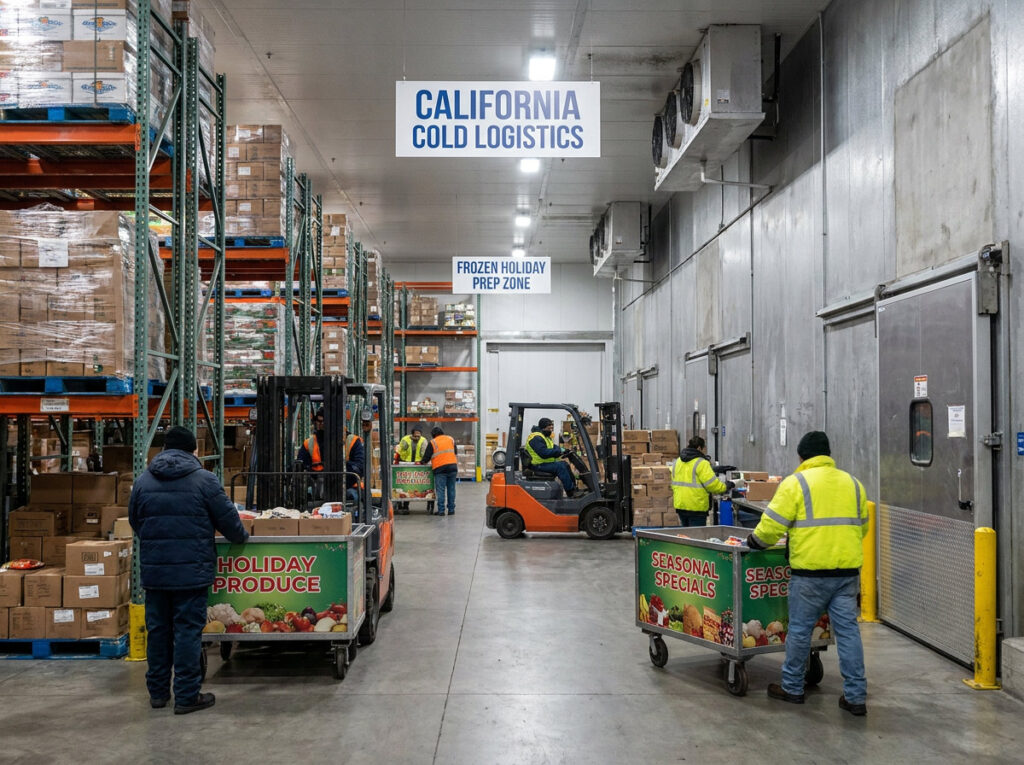
For grocery chain operations in California, seasonal inventory surges are a fundamental fact of the business. The weeks before Thanksgiving and Christmas, the summer produce rush, back-to-school periods, and major promotional events all drive cold storage demand well above normal operating levels. Managing these surges well is what separates grocery operations that run smoothly during their most profitable periods from those that scramble.
Refrigerated containers have become a practical tool in the toolkit of grocery chains and grocery distribution operations that handle these surges strategically rather than reactively.
The Seasonal Cold Storage Problem in Grocery
A grocery distribution center or large-format store’s cold storage is sized for average operating volume. That’s a deliberate design decision — sizing for peak volume would mean carrying enormous unused capacity for most of the year, which is expensive and inefficient.
The consequence is that every peak season brings the same tension: more product needs to be cold than there’s cold space for. The traditional workarounds — cramming more product into existing cold rooms, temporarily using non-refrigerated staging areas, or rushing to find third-party cold storage — all carry costs that grocery operators know well.
Overcrowded cold storage creates airflow problems that cause temperature variation within the space, potentially taking product out of spec while technically inside the cold room. It also creates operational chaos: slower picking, harder access, and more damage from product handling in tight spaces.
Non-refrigerated staging is a compliance risk and a product quality risk. Even “just for a few hours” exposures add up and affect shelf life.
Third-party cold storage adds transportation cost, handling risk, and inventory visibility complexity. Product that’s off-site is harder to manage and creates more cold chain transfer points.
How Refrigerated Containers Fit Into Grocery Operations
Refrigerated containers — positioned at distribution centers or large-format store back-of-house areas — provide a cleaner solution that avoids most of these problems.
At distribution centers: Containers positioned in the staging yard act as an extension of the refrigerated warehouse. Product can flow from receiving into containers and back into the primary facility as orders clear space, all within the operational footprint and without additional transportation.
At store locations: Large-format grocery stores with back-of-house loading areas can position containers adjacent to receiving docks during peak seasons. This is particularly useful for stores that receive large holiday special-order shipments — cases of product ordered specifically for seasonal promotions — without disrupting normal ambient storage flow.
For floral departments: Grocery floral operations have one of the most temperature-sensitive cold storage requirements in the store. A dedicated reefer container sized for seasonal floral inventory allows the floral department to receive and hold holiday volume without competing for space with produce or dairy.
The Operational Benefits Grocery Managers Report
Grocery operations that integrate temporary reefer containers into their seasonal planning consistently report the same operational improvements:
- Cleaner receiving operations during peak periods, because there’s a conditioned place for overflow product to go immediately
- Better inventory visibility, because product in an on-site container is trackable and accessible, unlike product that’s been shuttled to an off-site facility
- Reduced product damage, because containers provide clean, organized storage rather than the jam-packed, difficult-to-navigate conditions that create picking damage
- Faster seasonal ramp-up, because the team has a clear playbook rather than improvising solutions when volume exceeds capacity
The Financial Argument
The cost of a seasonal reefer container rental for a major grocery distribution center is a modest line item relative to the seasonal revenue those peak periods generate. When measured against the alternative costs — spoilage write-offs, third-party storage and transportation, overtime labor for handling problems — the rental typically comes out well ahead on a cost-benefit basis.
For grocery chains that run this analysis honestly, the number that usually surprises people is what “normal” peak-season spoilage and handling waste actually costs when fully accounted for. Right-sized cold storage during peak periods often pays for itself in reduced waste alone.
Planning Ahead Makes All the Difference
The grocery operations that handle seasonal surges best share one practice: they plan their temporary cold storage months in advance, not weeks. Container availability in California tightens significantly as peak periods approach, and last-minute bookings come with limited choice of unit size and higher pricing.
A booking placed two to three months before a major seasonal surge ensures the right unit at the right price, delivered on your schedule rather than someone else’s.
A&S Reefers: Seasonal Cold Storage for California Grocery Operations
A&S Refrigerated Containers provides refrigerated container rentals and sales for grocery chains and grocery distribution operations throughout California. Fast delivery, flexible rental terms, and 24/7 service support make them a reliable partner for seasonal cold storage planning.
Get ahead of your next seasonal surge. Contact us or call 1-855-265-3911 for a free quote.